
How to Add a Subpanel to Your Orangeburg SC Garage or Workshop
By Sikes Electrical | September 06, 2026 | 8 min read
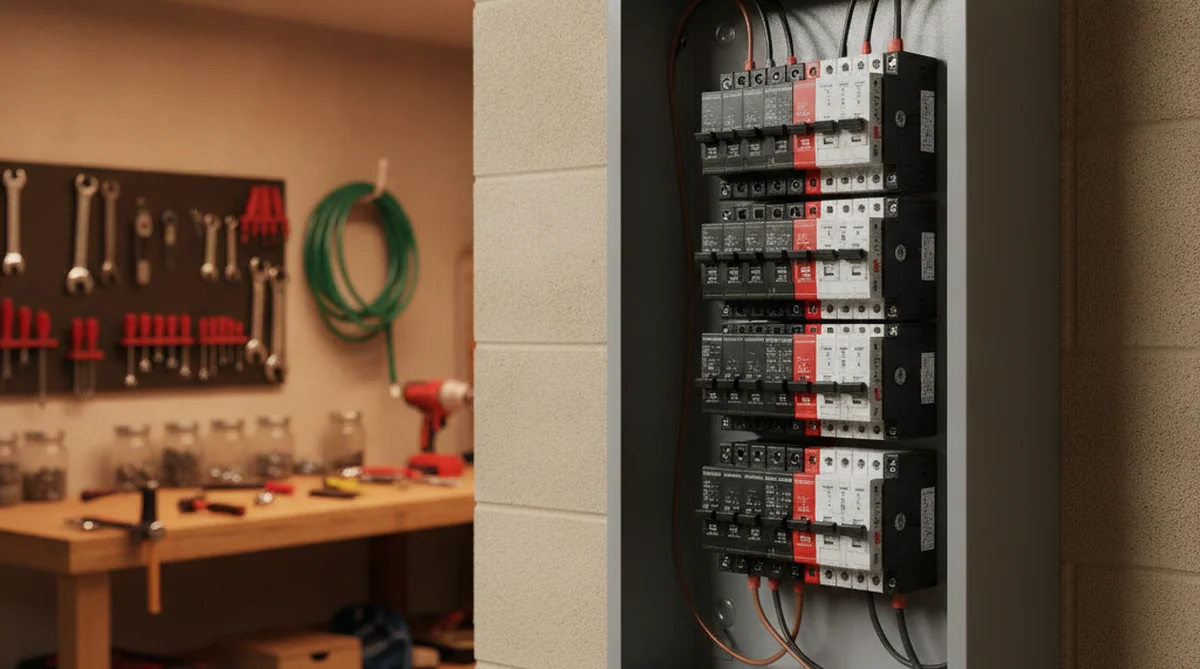
Adding a subpanel to your Orangeburg SC garage or workshop involves installing a secondary electrical panel that connects to your main service panel, providing dedicated circuits for tools, lighting, and equipment without overloading your home's existing electrical system. This upgrade typically costs between $800 and $2,500 depending on amperage, distance from the main panel, and whether you need trenching or conduit installation across your property.
Why Orangeburg Homeowners Need Garage Subpanels
A subpanel is essential for garage and workshop spaces because it prevents circuit overloads and provides adequate power for modern tools and equipment. Many homes in Orangeburg County were built when garages served simply as car storage, not as functional workshops with air compressors, table saws, welders, and electric vehicle chargers. Without a dedicated subpanel, running multiple high-draw tools simultaneously can trip breakers, create voltage drops, or even pose fire hazards.
Installing a subpanel also increases your property value and makes future electrical additions much simpler. Whether you're setting up a woodworking shop, adding an EV charging station, or creating a home gym in your detached garage, a properly sized subpanel gives you the electrical capacity and circuit availability you need.
What Size Subpanel Does Your Orangeburg Workshop Need
Most garage and workshop subpanels in Orangeburg range from 60 to 100 amps, though the right size depends on your specific power requirements. To determine the proper amperage, calculate the total wattage of all tools and equipment you might run simultaneously, then divide by 240 volts to get the amperage needed.
For a basic garage with standard lighting, a few outlets, and occasional power tool use, a 60-amp subpanel typically suffices. However, if you plan to run welders, large air compressors, electric heaters, or install an EV charger, you'll likely need a 100-amp subpanel. As a licensed local electrician for residential and commercial wiring, panel upgrades, EV chargers, generators, and electrical repairs, Sikes Electrical can assess your specific needs and ensure your main panel has sufficient capacity to support the new subpanel.
Remember that your main service panel must have enough available capacity to feed the subpanel. Many older homes in Orangeburg have 100-amp or 150-amp main panels, which may require upgrading before adding a substantial subpanel load.
Step-by-Step Process for Installing a Garage Subpanel
The installation process begins with obtaining the proper permits from Orangeburg County, which ensures your electrical work meets National Electrical Code standards and local requirements. A licensed electrician will then assess your main panel's available capacity and determine the best routing path for the feeder cable.
The basic installation steps include:
- Main panel preparation: Installing a circuit breaker in your main panel to feed the subpanel (typically 60-100 amps)
- Running feeder cable: Installing appropriately sized wire (typically 6 AWG for 60-amp or 2 AWG for 100-amp service) from the main panel to the subpanel location
- Subpanel mounting: Securing the new panel box to the garage wall at the proper height and ensuring adequate working clearance
- Making connections:Wiring the feeder cable to both panels with proper bonding and grounding
- Installing branch circuits: Adding individual breakers and circuits for outlets, lighting, and dedicated equipment
- Inspection: Scheduling a county inspection to verify code compliance before energizing the system
The distance between your main panel and garage significantly impacts installation complexity and cost. Detached garages in Orangeburg often require underground conduit runs or overhead service, while attached garages allow for simpler interior routing through walls or attics.
When to Call a Licensed Electrician for Your Subpanel Installation
Subpanel installation is not a DIY project and requires a licensed electrician to ensure safety and code compliance. Working inside service panels involves exposure to live electrical components carrying enough current to cause fatal electrocution, and improper installation can create fire hazards or damage expensive equipment.
South Carolina law requires that electrical work of this scope be performed by licensed professionals and inspected by local authorities. Additionally, improper subpanel installation—such as incorrectly bonding the neutral and ground buses or using undersized wire—can create dangerous conditions that may not be immediately apparent but pose serious long-term risks.
If you're planning a garage or workshop upgrade in Orangeburg County, call Sikes Electrical at (803) 596-3122 for a professional assessment and accurate quote. Our team understands local code requirements and can complete your installation efficiently while ensuring full compliance with Orangeburg County building regulations.
Common Mistakes to Avoid with Garage Subpanels
The most critical error in subpanel installation is incorrectly bonding the neutral and ground buses, which should remain separate in a subpanel (unlike in your main panel where they're bonded together). This mistake creates a parallel path for neutral current through the grounding system, potentially energizing metal components and creating shock hazards.
Other common mistakes include:
- Undersizing the feeder wire for the distance and amperage, causing voltage drop and overheating
- Failing to install proper grounding electrodes for detached structures
- Using aluminum wire without proper connectors and anti-oxidant compound
- Inadequate weatherproofing for exterior or detached garage installations in Orangeburg's humid climate
- Not leaving sufficient working clearance around the panel as required by code
- Installing the subpanel in a location that may become inaccessible or doesn't meet height requirements
Professional installation eliminates these risks and ensures your subpanel operates safely for decades. Licensed electricians also carry proper insurance, protecting you from liability if accidents occur during installation.
Costs and Permits for Subpanel Installation in Orangeburg
Expect to invest between $800 and $2,500 for a complete garage subpanel installation in Orangeburg County, with costs varying based on several factors. A 60-amp subpanel for an attached garage with a short wire run typically falls on the lower end, while a 100-amp subpanel for a detached garage requiring underground trenching or significant conduit work costs considerably more.
Cost factors specific to Orangeburg installations include:
- Subpanel amperage and number of circuit spaces (60-amp vs. 100-amp)
- Distance from main panel to garage location
- Whether installation requires trenching, boring, or overhead service
- Number and type of circuits needed in the garage
- Condition and capacity of your existing main panel
- Permit fees and inspection requirements for Orangeburg County
All electrical work in Orangeburg County requires proper permitting and inspection. Your electrician should handle permit acquisition and coordinate inspections, which are typically scheduled after installation is complete but before the panel is energized. This process ensures your installation meets all safety standards and protects your home insurance coverage.
Frequently Asked Questions
Do I need a permit to install a subpanel in my Orangeburg garage?
Yes, Orangeburg County requires electrical permits for subpanel installations to ensure compliance with National Electrical Code and local regulations. Your licensed electrician should obtain the permit and coordinate the required inspection before the system is energized.
Can I install a subpanel myself to save money?
No, subpanel installation requires a licensed electrician in South Carolina due to the complexity and safety risks involved. Working inside electrical panels involves potentially fatal voltage levels, and improper installation creates fire hazards and code violations that can affect your home insurance and resale value.
How far can a subpanel be from the main panel?
There's no maximum distance, but longer runs require larger wire to compensate for voltage drop. For runs over 100 feet, you may need to upsize the wire by one or two gauge sizes to maintain proper voltage at the subpanel and ensure tools operate efficiently.
What's the difference between a subpanel and a main panel?
A main panel receives power directly from the utility and has bonded neutral and ground buses, while a subpanel receives power from the main panel and keeps neutral and ground buses separate. The main panel also contains the main disconnect breaker that shuts off power to the entire home.
Can I add a subpanel if my main panel is full?
It depends on whether your main panel has sufficient amperage capacity, not just available breaker spaces. A licensed electrician can perform a load calculation to determine if your main service can support a subpanel, or if you need a main panel upgrade first.
Published September 06, 2026 | Sikes Electrical serves Orangeburg, Sumter, Summerville, Bamberg, Holly Hill, and surrounding counties in the SC Midlands.
Get a Free Estimate
Licensed electrician in Orangeburg County. Call us today for a no-obligation quote.
(803) 596-3122 Free Estimate FormOur Services
- Residential Electrical
- Panel Upgrades
- EV Charger Installation
- Generator Installation
- Lighting
- Electrical Inspections