
How to Choose the Right Size Generator for Your Orangeburg, SC Home
By Sikes Electrical | October 11, 2026 | 8 min read
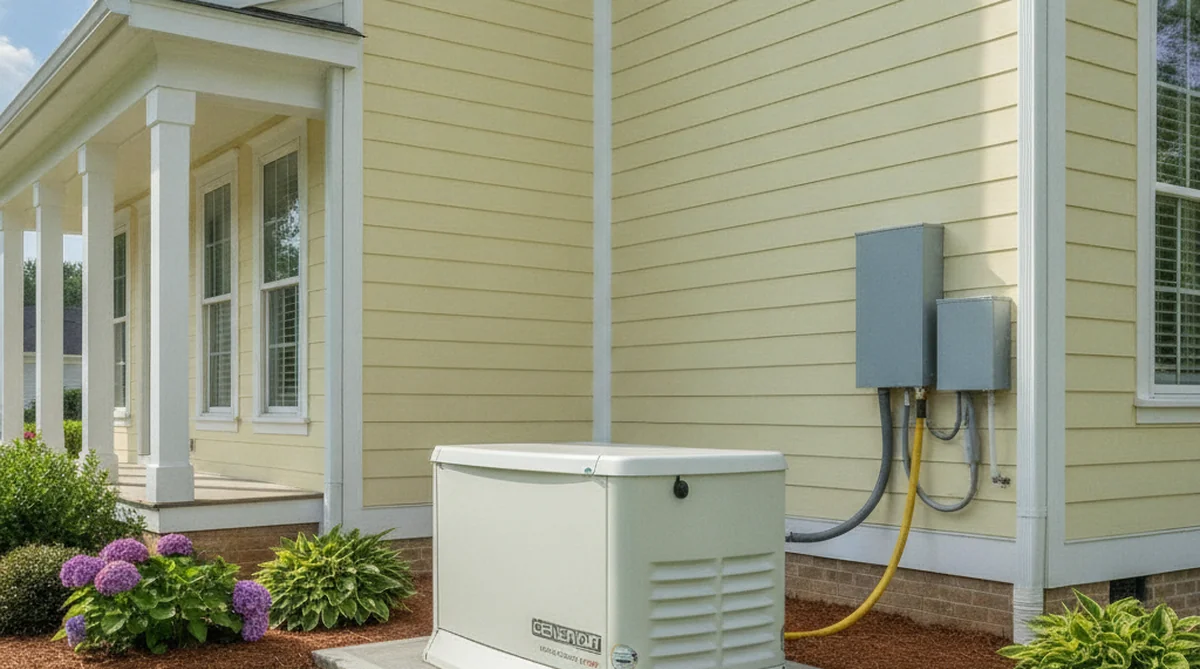
To choose the right size generator for your Orangeburg, SC home, you'll need to calculate your essential power needs by adding up the wattage of all appliances and systems you want to run during an outage, then add 20-30% for surge capacity. Most Orangeburg homes require between 7,500 and 20,000 watts depending on home size and whether you need whole-home coverage or just essential circuits.
Understanding Generator Sizing Basics for Orangeburg Homes
Generator sizing is measured in watts or kilowatts (kW), with 1,000 watts equaling 1 kilowatt. The right size generator for your Orangeburg County home depends on whether you want to power your entire house or just essential circuits during power outages. Given Orangeburg's susceptibility to summer thunderstorms and occasional severe weather events that can knock out power for hours or even days, having the right-sized backup generator ensures your family stays comfortable and safe.
There are two key numbers to understand: running watts (the continuous power needed to keep devices operating) and starting watts (the surge power needed when motors and compressors first turn on). Air conditioners, well pumps, and refrigerators all require significantly more power to start than to run, which is why proper sizing calculations are critical.
Calculating Your Home's Essential Power Needs
To determine the right generator size, start by making a list of every appliance and system you want to keep running during an outage. In Orangeburg's hot, humid climate, most homeowners prioritize air conditioning, refrigeration, lights, and at least one bathroom. Walk through your home and note the wattage of each essential item—you can usually find this information on the appliance label or in the owner's manual.
Here are typical wattage requirements for common household items in Orangeburg homes:
- Central air conditioning (3-ton): 3,500-5,000 running watts, 10,000-15,000 starting watts
- Refrigerator: 600-800 running watts, 2,000-2,500 starting watts
- Well pump (if applicable): 1,000-2,000 running watts, 2,000-4,000 starting watts
- Electric water heater: 4,000-5,500 watts
- Sump pump: 800-1,200 running watts, 1,300-2,900 starting watts
- LED lights (per bulb): 10-20 watts
- Television: 100-400 watts
- Microwave: 600-1,200 watts
For professional help calculating your specific needs, the licensed local electricians at Sikes Electrical can perform a complete load analysis of your Orangeburg home and recommend the perfect generator size. Call (803) 596-3122) to schedule a consultation.
Common Generator Sizes for Orangeburg County Homes
Most residential generators fall into a few standard size categories, each suited for different home sizes and power needs. For Orangeburg homes, here's a breakdown of what each size typically covers:
7,500-10,000 watts (portable): This size works for small homes or essential circuits only. You can typically run a refrigerator, several lights, a television, and some small appliances, but not central air conditioning. These are often portable units that can be a good budget-friendly option for minimal backup power.
12,000-16,000 watts (standby): This mid-range size suits many Orangeburg homes between 1,500-2,500 square feet. It can handle essential circuits including a smaller central AC unit, refrigerator, well pump, lights, and select outlets throughout the home. This is one of the most popular sizes for residential installations.
17,000-20,000 watts (standby): Ideal for larger homes up to 3,000 square feet or homes with higher power demands. This size can typically run your whole house including a full-size central air conditioner, all appliances, and multiple systems simultaneously.
22,000+ watts (standby): These larger units are designed for homes over 3,000 square feet or properties with special requirements like multiple HVAC zones, large well pumps, or additional structures that need power.
Whole-House vs. Essential Circuits: Which Option Is Right?
When sizing a generator, you'll need to decide between powering your entire Orangeburg home or just essential circuits. Whole-house generators automatically power everything in your home during an outage, requiring no manual intervention or circuit selection. These larger units (typically 20kW+) cost more upfront but provide complete convenience and comfort.
Essential circuit generators power a pre-selected panel of critical circuits through a manual or automatic transfer switch. This approach is more economical and works well if you're willing to sacrifice some non-essential conveniences during outages. Most Orangeburg homeowners choose to prioritize cooling, refrigeration, lighting, and one or two other critical systems rather than investing in full whole-house coverage.
Special Considerations for Orangeburg's Climate and Infrastructure
Orangeburg County's specific climate and infrastructure factors should influence your generator sizing decision. The area's hot, humid summers make air conditioning more than a luxury—it's a health necessity, especially for elderly residents or families with young children. When outages occur during peak summer months, the ability to run your AC unit becomes a top priority.
Additionally, many homes in rural areas of Orangeburg County rely on well pumps for water. If this applies to your property, you'll need to account for both the running and starting watts of your well pump system. Without a properly sized generator, you could face the dual challenge of no electricity and no running water during extended outages.
Professional Installation and Proper Sizing by Sikes Electrical
Choosing the right generator size is just the first step—proper installation by a licensed electrician is equally important for safety and performance. Sikes Electrical specializes in residential and commercial generator installations throughout Orangeburg County, including complete electrical panel upgrades when necessary to accommodate your new backup power system.
Our team handles everything from load calculations and generator selection to transfer switch installation and local permitting. We ensure your generator is properly sized not just for your current needs but for any future additions like EV chargers or home expansions. As your local Orangeburg electrician, we understand the specific codes and requirements for our area, and we stand behind our work with professional support and service.
Don't guess when it comes to protecting your home and family during power outages. A correctly sized generator provides peace of mind, while an undersized unit leads to frustration and potential damage to both the generator and your appliances. Contact Sikes Electrical today to discuss your backup power needs and get expert recommendations tailored to your Orangeburg home.
Frequently Asked Questions
What size generator do I need for a 2,000 square foot home in Orangeburg?
Most 2,000 square foot homes in Orangeburg need a 14-16kW standby generator to run essential circuits including a central air conditioner, refrigerator, lights, and select appliances. For whole-house coverage, you'll likely need an 18-20kW unit depending on your specific electrical load and whether you have electric heating or a well pump.
Can a generator run my air conditioner during Orangeburg's summer heat?
Yes, but your generator must be properly sized for your AC unit's starting and running wattage. A typical 3-ton central AC unit requires 10,000-15,000 starting watts and 3,500-5,000 running watts. You'll need at least a 12-14kW generator to run AC plus other essential circuits.
What's the difference between a portable and standby generator for my home?
Portable generators are smaller (typically 3,000-10,000 watts), require manual setup, and must be refueled regularly with gasoline. Standby generators are permanently installed, automatically start when power goes out, run on natural gas or propane, and can power much larger loads ranging from 12kW to 48kW or more.
Do I need a special permit to install a generator in Orangeburg County?
Yes, standby generator installations in Orangeburg County typically require electrical permits and must meet local building codes. A licensed electrician like Sikes Electrical will handle all permitting and ensure your installation meets safety standards and local regulations.
How much does it cost to install a whole-house generator in Orangeburg, SC?
Whole-house generator installation in Orangeburg typically ranges from $5,000 to $15,000 depending on generator size, fuel type, distance from your gas line or propane tank, and whether your electrical panel needs upgrading. The best approach is to get a customized quote based on your home's specific requirements.
Published October 11, 2026 | Sikes Electrical serves Orangeburg, Sumter, Summerville, Bamberg, Holly Hill, and surrounding counties in the SC Midlands.
Get a Free Estimate
Licensed electrician in Orangeburg County. Call us today for a no-obligation quote.
(803) 596-3122 Free Estimate FormOur Services
- Residential Electrical
- Panel Upgrades
- EV Charger Installation
- Generator Installation
- Lighting
- Electrical Inspections